
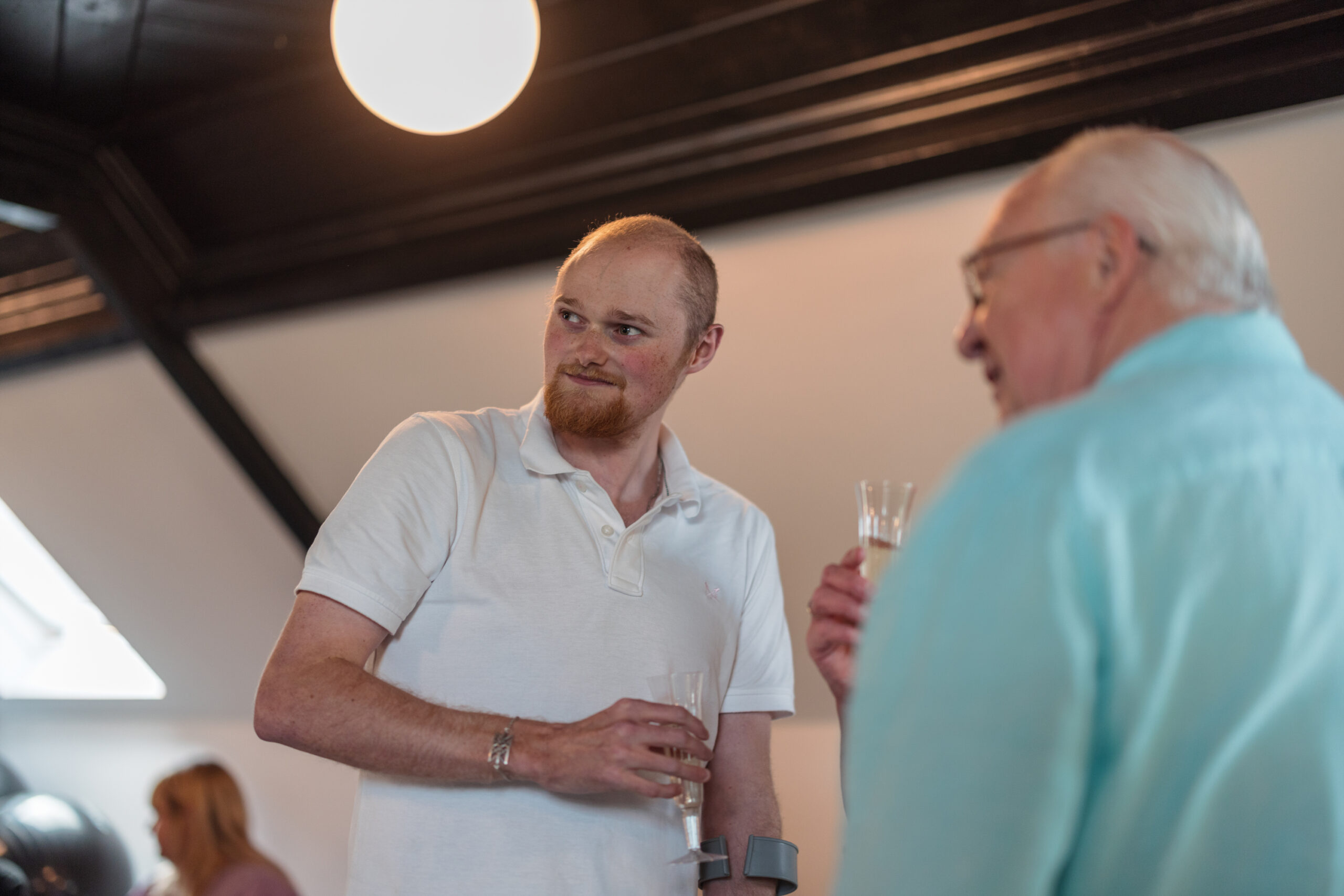
Remembering Tom: More Than A Diagnosis, by Vicky Smith
Some people come into our lives through our work and leave an impression that extends far beyond it.
Recently, we lost someone who had been part of my professional life for over a decade. Tom was just 16 years old when I first started treating him. Over the following 11 years, I had the privilege of knowing him, supporting him and witnessing some of the challenges he faced living with an extremely rare and serious medical condition, vascular Ehlers Danlos Syndrome, or vEDS.
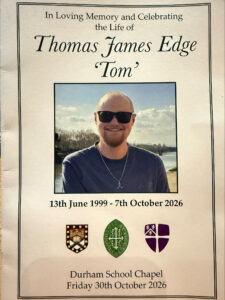
A few weeks ago, Tom sadly died. He was 27 years old.
Twenty-seven. An age where so much of life should still lie ahead.
I wanted to write this not only to remember Tom, but as an opportunity to shine a light and raise awareness for vEDS.
It is a condition that many people will never have heard of, and one whose seriousness is often not fully understood.
And perhaps, by sharing a little more about it, something meaningful can come from such a heartbreaking loss.
Understanding vascular Ehlers-Danlos syndrome
Many people may have heard of Ehlers-Danlos syndrome (EDS), often associating it with unusually flexible joints, joint instability or stretchy skin. We see a lot of clients here at Tayloredfit with hEDS (hypermobile EDS).
But EDS is not one single condition. It is a group of inherited connective tissue disorders, and the different types can have very different effects on the body.
Vascular Ehlers-Danlos syndrome is one of the rarest and most serious forms, most definitely “the worst” of all EDS. It is usually caused by a genetic alteration affecting type III collagen, an essential structural protein that helps provide strength and support to our blood vessels and internal organs.
In someone with vEDS, this structural support is compromised.
The walls of arteries can be unusually fragile, increasing the risk of them tearing or rupturing. Certain internal organs, particularly the bowel, can also be vulnerable to serious complications.
What makes this condition particularly difficult is its unpredictability.
Someone can appear relatively well on the outside while living with a significant underlying medical risk. Serious complications can develop suddenly, sometimes with little warning.
And unlike many conditions where symptoms gradually progress and provide an indication of deterioration, vEDS does not always offer that opportunity.
It is a condition that demands respect, understanding and specialist care.
Living with an invisible vulnerability
One of the challenges with rare conditions is that so much of what someone experiences may be invisible to those around them.
We often associate serious illness with obvious physical signs. But appearances can be misleading.
For someone living with vEDS, the reality can involve navigating a delicate balance between enjoying everyday life and managing risks that most of us rarely have to consider.
Exercise, physical activity, injuries, medical procedures and even seemingly ordinary symptoms may need to be approached differently.
There may be ongoing pain, fatigue or physical limitations. There may also be the emotional weight of living with uncertainty.
Imagine having to consider risks and consequences in situations that others take for granted.
And imagine having to do that while growing up, finding your independence and trying to experience everything that being a young adult should involve.
Of course, no two people experience vEDS in exactly the same way. Each person’s medical journey, challenges and outlook will be different.
But a diagnosis should never become the whole story of a person.
Tom’s diagnosis certainly never defined him or stopped him living a very full life of adventure, of sport, of university, of travel and of love. His personality, friendships, ambitions, interests, relationships and countless everyday moments that existed alongside his vEDS never ceased to amaze me, inspire me, and at times, absolutely terrify me!! His calm demeanour and casual tone when relaying his latest medical emergency, surgery or hospital admission enabled me to be the best physio Tom needed in those moments. The experiences and knowledge I gathered along the way have allowed me to share that learning with colleagues and clients, and have helped shape the clinician I am today.
In order for me to share some of Tom’s story, I have had to go back through my notes, to reflect on some of our time together and – whilst I am incredibly sad that I will no longer get to see him and wind each other up about our mutual love of sport, I will be forever grateful that Tom and his family chose me, us, to help support and facilitate treatment, guidance, reassurance, support or a stern telling off!! Over the years, Tom pushed the envelope of what he ‘should’ be doing – but navigating the tightrope of living his life, experiencing and enjoying things some of us would never even dream of – it is what made Tom, Tom. He was never destined to live in a ‘bubble’ of ‘better not do that, just in case’ – but may also account – according to my notes – by 2022 he had clocked up 12 shoulder dislocations (sustained originally from water polo but spontaneous dislocations turning over in bed, or sneezing was commonplace!). Out of respect for Tom’s family and friends, I choose not to share some of the more significant medical incidents/ emergencies and treatments – this blog is not about medical jargon but more about the man and the complexity of the condition.
Tom was the kind of guy that no matter what was going on for him, he would always ask after the kids, our goldies, the business, he was there at every Tayloredfit event, would chat to anyone, would always help out and features in some of our professional photos too. When a client sees you over a long period of time, there is a different relationship, a deeper care and mutual understanding – of texts to ask advice or to see if there was an extra slot I could see him, of stories shared that bond not a physio and client, but friends. Tom knew my wind-up weakness, and I was always ready (usually linked to a Newcastle United loss and a Sunderland win – how bittersweet at the moment as I would relish rubbing it in that he’s bottom of the prem – I know we are not doing great either but still above you!!) It will forever feel different now – you arse Tom – can’t even enjoy that!! The joy in his new car a couple of years ago – what a beast (and green too!) – I snuck outside after his treatment to ogle and share his delight. The sparkle in his eye when he’d met Kaylie, undoubtedly ‘the one’ – sharing house news, shopping, advice on colours – his joy was infectious and I am grateful for those moments.
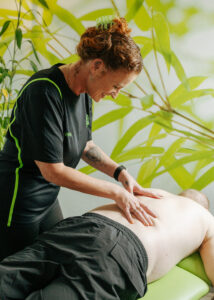
And so what?? Why was I there in my physio and CranioSacral role for Tom? I believe it highlights the importance of understanding, awareness and individualised care.
As a physiotherapist, I’ve always believed that treating someone is about so much more than addressing the symptoms they present with.
It’s about understanding the individual in front of you.
Their medical history, their concerns, their goals and what matters most to them.
With a condition like vEDS, that understanding becomes particularly important.
The fragility of connective tissue means that treatment, exercise and rehabilitation need to be carefully considered. What may be entirely appropriate for one person could be unsuitable for someone living with vascular EDS.
There is no cure for vEDS, but specialist medical management, appropriate monitoring, emergency planning and individualised support can help people manage risks and maintain quality of life. I have to acknowledge and shout out to Tom’s amazing mum and dad, Clare and Andrew – whilst I can not even begin to imagine navigating those years of supporting, encouraging with their ‘can do’/ pragmatic approach and the pain they are now enduring, Tom knew their love and support allowed him to live such a rich and tapestried life. You are gems indeed. And to Kaylie, to know and be loved, whilst it hurts right now, some never find, and he loved you beyond words xx
Tom made me a better physio, one who recognised the importance of listening, seeing the person in front of you and definitely, thinking ‘outside the box’. What box?!
Why awareness matters
Rare conditions can present enormous challenges, not least because many people, including healthcare professionals, may have limited experience of them.
Vascular Ehlers-Danlos syndrome is estimated to affect only a small proportion of the population – estimated to affect roughly 1 in 50,000 to 1 in 200,000 people. In the UK, roughly 740 people are estimated to live with vEDS, representing less than 5% of all Ehlers-Danlos syndrome diagnoses.
Rare does not mean insignificant. Early recognition, appropriate genetic diagnosis and access to specialist care can make a meaningful difference.
Recognising potentially serious symptoms is especially important. For someone with vEDS, sudden unexplained chest, abdominal, back or head pain may indicate a medical emergency and requires urgent assessment.
Greater awareness can support earlier diagnosis, better-informed clinical decisions and safer, more coordinated care.
It can also help friends, family, colleagues and communities understand the challenges that aren’t always visible. Sometimes it simply means listening, believing, learning and being willing to see the world from someone else’s perspective.
Remembering Tom
When I think about the eleven years I knew Tom, I don’t want his story to be defined solely by the condition he lived with.
Yes, vascular Ehlers-Danlos syndrome was a significant part of his life.
And yes, it is important to acknowledge the seriousness of a condition that can take someone from their family, friends and future at such a young age.
But Tom was the best example of how good and kind a person can be – the empathetic, funny, stubborn, sarcastic, lush man will live on in all who knew him. He was a young man with his own personality, experiences, relationships and a life that mattered deeply to those who knew and loved him.
As a healthcare professional, we are privileged to be invited into people’s lives, often during difficult or vulnerable moments.
Some of those relationships last weeks or months. Others span years.
And occasionally, someone leaves a lasting impression that goes far beyond the treatment room.
Tom was one of those people.
A lasting legacy
My hope in sharing this is that more people will become aware of vascular Ehlers-Danlos syndrome.
That someone reading might recognise the importance of understanding rare conditions.
That healthcare professionals might be encouraged to learn a little more.
And that those living with vEDS, or supporting someone who does, feel seen and understood.
Most importantly, I hope this honours Tom.
Not simply as someone who lived with a rare and serious condition, but as someone whose life, however heartbreakingly short, had meaning and touched the lives of so many others.
To Tom’s family and friends, my thoughts are with you.
And to Tom — thank you for the trust you placed in me and our team over those eleven years, for the conversations we shared and for everything you taught me along the way.
You were always so much more than your diagnosis. And you will be remembered for so much more, too. Rest now Tom xxx
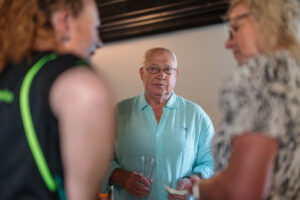
Thank you to Tom’s parents for allowing me to share part of Tom’s story. If you would like to find out more about this condition or feel moved to donate to the UK charity dedicated to supporting patients and families affected by vascular Ehlers Danlos Syndrome, I encourage you to head here Welcome to Annabelle’s Challenge Vascular EDS Charity
Vicky Smith, Physio, CranioSacral Therapist, Pilates instructor, Founder and Clinical Director of Tayloredfit Physio